Hair loss can be frustrating, emotional, and confusing—especially when you’re searching for treatments that actually work. One of the most talked-about non-surgical options today is PRP hair treatment, known for its natural approach and promising results. But what do hair PRP before after results really look like, and what should patients realistically expect?
This guide breaks down everything you need to know—from timelines and visible changes to factors that affect results—so you can make an informed decision about PRP hair restoration in New Jersey.
What Is PRP Hair Treatment?
PRP (Platelet-Rich Plasma) hair treatment is a regenerative therapy that uses your body’s own platelets to stimulate hair growth. A small amount of blood is drawn, processed to concentrate platelets, and then injected into the scalp where hair thinning or loss is present.
Platelets contain growth factors that help:
Reactivate dormant hair follicles
Improve scalp circulation
Strengthen existing hair strands
Slow down further hair thinning
Because PRP uses your own blood, it is considered a natural and minimally invasive hair restoration option.
Why People Search for Hair PRP Before After Results
Most patients don’t just want to know how PRP works—they want to know what changes they will actually see.
Common questions include:
Will my hairline grow back?
How long before results appear?
Are PRP results permanent?
Is PRP worth it for my stage of hair loss?
Understanding hair PRP before after outcomes helps set realistic expectations and prevents disappointment.
Hair PRP Before Treatment: What Your Starting Point Looks Like
Before PRP treatment, patients typically experience one or more of the following:
Gradual hair thinning on the crown or hairline
Excessive hair shedding during washing or brushing
Reduced hair volume and density
Weak, brittle, or miniaturized hair strands
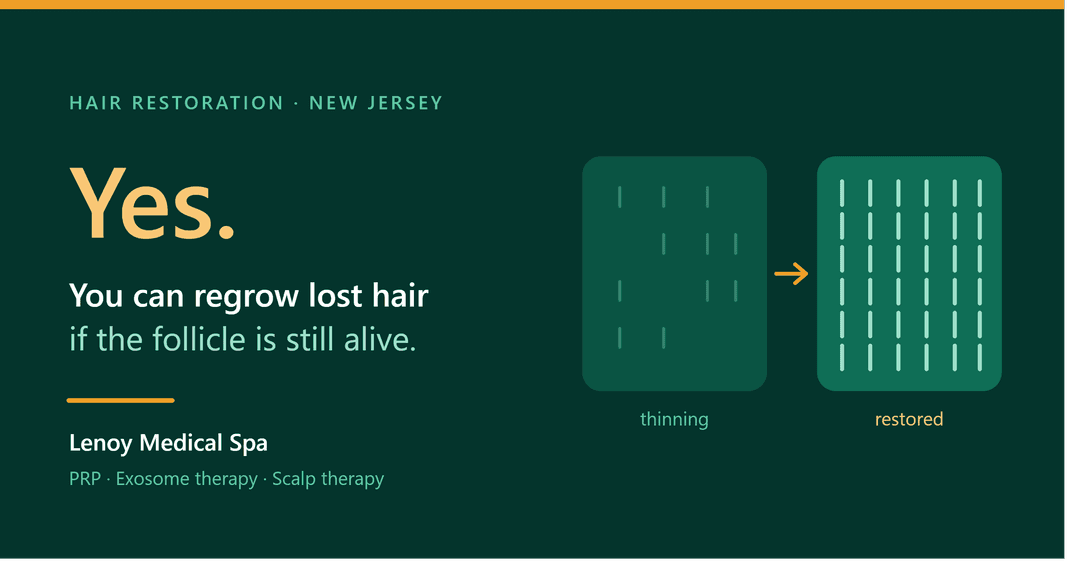
PRP works best when hair follicles are still alive but inactive. Completely bald areas usually respond less effectively.
Ideal Candidates for PRP Hair Treatment
Men and women with early to moderate hair loss
Patients with androgenetic alopecia (pattern hair loss)
Individuals experiencing stress or hormone-related shedding
Patients not ready for hair transplant surgery
At Lenoy Medical Spa in New Jersey, a detailed scalp and hair assessment is performed before treatment to determine eligibility.
Hair PRP After Treatment: What Changes Can You Expect?
PRP results are gradual, not instant. Hair growth follows a biological cycle, which means patience is essential.
1–2 Months After PRP
Reduced hair fall
Improved scalp health
Hair may feel thicker or stronger
Visible regrowth is usually minimal at this stage, but internal healing has started.
3–4 Months After PRP
Noticeable improvement in hair texture
Early regrowth in thinning areas
Increased hair density in some patients
This is when many patients begin comparing hair PRP before after photos and noticing positive changes.
6 Months After PRP
Thicker, fuller-looking hair
Improved hairline or crown coverage
Stronger hair shafts with less breakage
This timeframe often shows the most satisfying hair PRP before after results.
9–12 Months After PRP
Peak results for most patients
Hair growth stabilizes
Maintenance treatments may be recommended
What Do Hair PRP Before After Results Really Show?
Realistic PRP outcomes usually include:
Hair thickening, not instant full regrowth
Improved density, especially in thinning areas
Healthier scalp and hair quality
PRP does not:
Create new hair follicles
Replace hair transplants in advanced baldness
Deliver overnight results
Understanding this helps align expectations with achievable outcomes.
Factors That Affect Hair PRP Before After Results
Not all PRP results are the same. Several factors influence success:
1. Stage of Hair Loss
Early-stage hair thinning responds better than advanced baldness.
2. Number of Sessions
Most patients need 3–4 initial sessions, spaced 4–6 weeks apart.
3. Overall Health
Nutrition, stress levels, hormonal balance, and medical conditions all play a role.
4. Lifestyle Habits
Smoking, poor diet, and lack of sleep can slow results.
5. Provider Experience
Proper PRP preparation and injection technique significantly impact outcomes.
At Lenoy Medical Spa, PRP protocols are customized for each patient to optimize results.
PRP Hair Treatment for Men vs Women: Before and After Differences
Men
Best results in crown and early hairline thinning
Slower progression of male pattern baldness
Improved hair thickness rather than full hairline restoration
Women
Noticeable volume improvement
Reduced hair shedding
Better overall scalp coverage
Hair PRP before after results in women often appear more evenly distributed across the scalp.
PRP Hair Treatment Safety and Side Effects
PRP is considered safe because it uses your own blood. Common side effects may include:
Mild scalp tenderness
Temporary redness or swelling
Slight soreness for 24–48 hours
There is minimal downtime, and most patients return to daily activities the same day.
How Long Do PRP Hair Results Last?
PRP results are not permanent without maintenance. Hair loss is often progressive, so follow-up sessions are important.
Typical maintenance plan:
Initial treatment: 3–4 sessions
Maintenance: 1–2 sessions per year
This helps preserve hair PRP before after results long-term.
PRP vs Other Hair Loss Treatments
PRP is often combined with:
Medical-grade topical treatments
Oral hair loss medications
Hair transplants (to improve graft survival)
PRP alone works best for early intervention, not complete hair restoration.
Hair PRP Treatment in New Jersey: What Local Patients Should Know
Patients seeking PRP hair treatment in New Jersey should consider:
Provider expertise and credentials
Personalized treatment plans
Realistic consultation discussions
Proper post-treatment care
Lenoy Medical Spa serves patients across New Jersey with evidence-based PRP protocols designed for safe and effective hair restoration.
Frequently Asked Questions
Does PRP really work for hair loss?
Yes, PRP can improve hair thickness and slow hair loss when follicles are still active.
When will I see PRP hair results?
Most patients notice visible changes between 3–6 months after treatment.
Is PRP hair treatment painful?
Discomfort is mild and temporary. Most patients tolerate the procedure well.
Can PRP regrow hair in bald areas?
PRP works best in thinning areas, not fully bald regions.
How many PRP sessions are needed?
Typically 3–4 initial sessions, followed by maintenance treatments.
Final Thoughts: Setting Realistic Expectations for Hair PRP Before After Results
PRP hair treatment is not a miracle cure—but when done correctly and at the right stage of hair loss, it can deliver noticeable, natural-looking improvement.
Understanding realistic hair PRP before after results helps patients stay confident, patient, and satisfied with their journey.
If you’re considering PRP hair treatment in New Jersey, a personalized consultation is the best first step to determine whether this treatment aligns with your hair restoration goals.
Last Update on :09 February, 2026
Related Blogs


Copyright © 2024-2026. All Rights Reserved.